


Wall Brawl - Tower Defense TD
Homa
I went into Wall Brawl - Tower Defense TD expecting a quick strategy game built around defending a stronghold, and that is exactly the role it fills best. It is a free strategy title from Homa, aimed at players who enjoy short defensive battles, gradual improvement, and the satisfaction of stopping an attack at the last possible moment. The presentation is easy to understand, but the useful question is whether it offers enough decision-making to keep me interested beyond the first few sessions.
My answer is cautiously positive. The game has a clear pick-up-and-play appeal, and its castle-defense theme gives every round an immediate objective. At the same time, it is better suited to casual strategy players than to people looking for a deep, highly technical tower-defense simulation. I would recommend trying it if you want something approachable for brief sessions, but I would not treat it as a replacement for a larger strategy game with extensive maps, complex economies, or long-term competitive systems.
How the current version feels in everyday play
The strongest part of the experience is its directness. You are not required to learn a large collection of menus before understanding the basic purpose of a battle: protect your side, make sensible defensive choices, and survive the pressure coming toward you. That clarity matters on a phone, especially when I want to play during a short break rather than commit to a long campaign session.
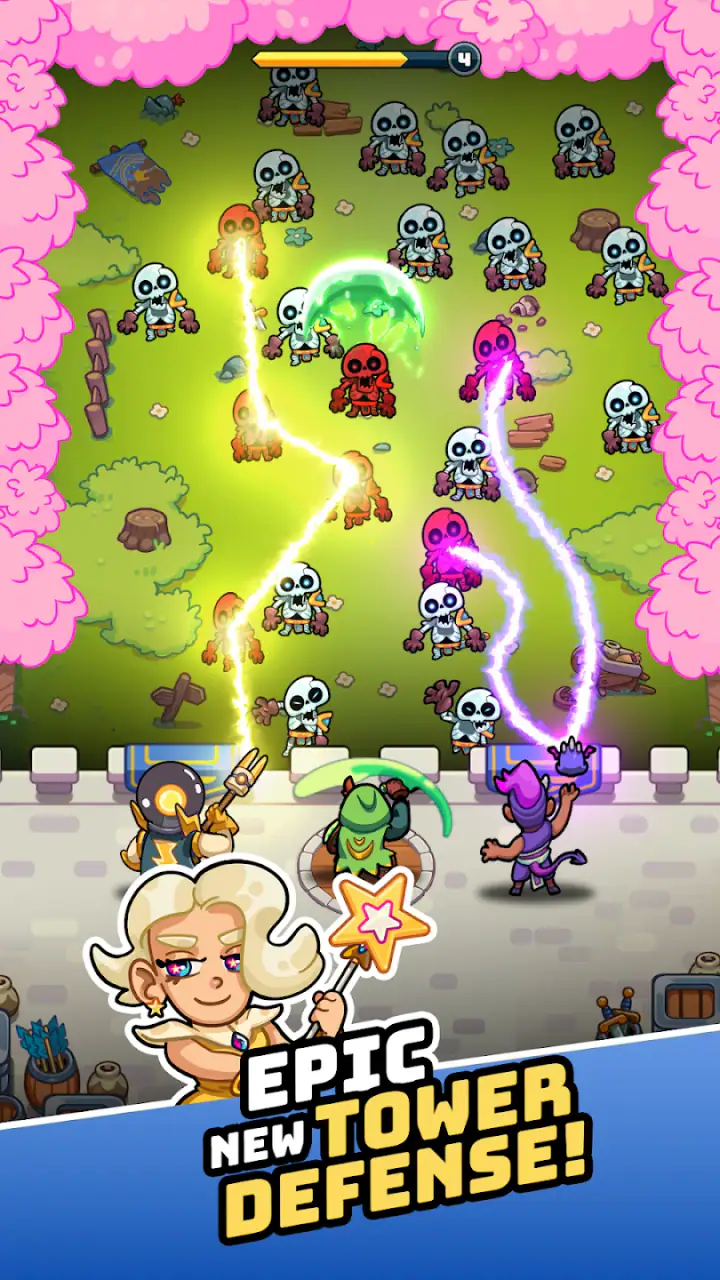
The store summary presents the game as an epic castle-defense and kingdom battle experience with role-playing and tower-defense elements. In practice, I found that description most useful as a reminder of the game’s intended blend: it is not purely a static tower-placement exercise, but it also does not feel like a full-scale kingdom management simulator. The appeal comes from combining defensive planning with the feeling of strengthening a small fighting force over time.
That makes it a good fit for someone who likes strategy games but does not want a dense interface. I can imagine opening it while waiting for a bus, playing a few encounters, and putting it away without losing the thread. The short-description label, “Wall Brawl,” also captures the compact personality of the game better than a grand strategy comparison would. The focus feels close to the action at the wall rather than spread across a huge world map.
Related News






The age rating is Everyone, which matches the accessible tone. I would still pay attention to the optional spending model, because the game is free to download and includes in-app purchases ranging from $0.99 to $99.99 per item. That does not automatically make the experience unsuitable for younger players, but it does make purchase controls and a clear household rule worthwhile if children use the device.
What makes the defensive loop enjoyable
For me, the satisfying part of a tower-defense game is not simply winning. It is noticing why a defense held or failed, then changing one decision on the next attempt. Wall Brawl works best when I approach it with that mindset. Instead of treating every loss as a reason to spend, I look at the shape of the pressure, consider whether my defensive choices were too concentrated, and decide whether a different upgrade path would give me more flexibility.
A useful habit is to avoid making every improvement immediately. When a game offers several ways to become stronger, spending everything as soon as it becomes available can leave a player with a powerful answer to one threat but no response to another. I prefer keeping some room for adaptation until I understand what the next encounter is asking from me. This is a small change in routine, but it makes the strategy feel more deliberate.
Gallery
Another practical tip is to use a failed round as a diagnostic rather than rushing straight into another attempt. I ask myself three questions: did the defense fail early, did it collapse near the end, and was the problem a lack of power or poor placement and timing? Those are different problems. More strength may help an early collapse, while a late failure can point to inefficient use of resources or an over-specialized setup.
This is also where the game can appeal to players who normally avoid strategy titles. The basic goal is obvious, and the defensive theme gives context to each decision. I do not need to memorize a complicated technology tree to understand why protecting the wall matters. The trade-off is that experienced tower-defense fans may want more layers than the streamlined format supplies.
How I would use it during a normal day
My most natural scenario for this game is a ten-minute break. I would start a battle with enough attention to make meaningful choices, finish the encounter, and then decide whether I have the patience for another. That rhythm is more comfortable than games that punish a player for stepping away at the wrong moment or demand a long uninterrupted session.
It can also work as a low-pressure introduction to the genre for a friend. I would recommend explaining the goal in simple terms, then encouraging them to experiment rather than copying an ideal setup. The early appeal comes from seeing a defense survive because of a choice you made, not from following a complicated guide before playing.
On the other hand, I would not choose it for a long evening when I want a rich campaign with a large variety of systems. Players who enjoy detailed map control, elaborate unit counters, or extensive base construction may find the focused wall-defense format too narrow. A more established, content-heavy tower-defense game would probably be a better match for that audience.
Development, version context, and what it means for players
The game was released on December 3, 2025, and the current version is 0.6.25. Those details matter because they place Wall Brawl in an early stage of its life rather than presenting it as a finished, long-established strategy platform. I see the current build as a foundation: the central idea is clear, but the long-term value will depend on how Homa develops the systems around it.
I would avoid judging the game solely by expectations about future updates. What matters today is whether the existing defensive loop is enjoyable without requiring the player to imagine content that has not arrived. In my experience, the answer is yes for short, casual play, although the sense of progression needs to remain meaningful if the game is going to hold the attention of dedicated strategy fans.
The version number also changes how I interpret rough edges. A limited-feeling system is not automatically a failure in an early release, but it is still a limitation for someone deciding where to spend time. I would rather see a small number of mechanics that interact cleanly than a crowded collection of features that do not affect decisions. The important test is whether each improvement gives me a new way to respond, not merely a larger number on the screen.
For existing users, the benefit of an early build is that the game has room to become more focused around what players actually enjoy. For new users, the trade-off is uncertainty about how broad the experience will become. I would start with modest expectations, learn the current loop, and decide based on whether the present version already gives me enough reason to return.
Homa is the developer, and the game’s presence is already substantial enough to show that it has attracted an audience: it has more than 100 thousand installs, with an average rating of 4.6 from about 1.9 thousand ratings. I read those figures as encouraging signs of initial interest rather than proof that every type of player will enjoy it. A high average can coexist with a narrow design target; casual players and advanced strategy players may judge the same simplicity very differently.
What changed expectations for me
The most important development fact is not a particular feature claim but the combination of a recent release and an early version. It tells me to evaluate the game as a growing product. I look for a stable core, readable decisions, and enough progression to make another round worthwhile. I do not assume that future additions will solve every current weakness, so I keep my recommendation tied to what is playable now.
This approach also helps existing users decide whether to continue. If you already enjoy the defensive encounters, a developing version can be appealing because each improvement may make the loop more comfortable or more varied. If you are already feeling that battles lack depth, I would not spend money simply because the game might expand later. Enjoy the current experience first, then treat any future development as a bonus.
For players concerned about device compatibility, the game requires Android 7.0 or later. That is a practical advantage for people using older Android hardware, although actual comfort will still depend on the phone and how smoothly it handles the game. I would install it on the device where I plan to play regularly and pay attention to responsiveness before making any purchase.
Where the current experience still has gaps
The main limitation is the balance between accessibility and depth. Wall Brawl is easy to approach because it does not overwhelm me, but that same focus can make the experience feel less rewarding if I want many distinct strategic identities. A player who enjoys testing unusual builds, solving intricate enemy combinations, or managing several battlefields may eventually want more room to experiment.
The free-to-play structure is another point to consider. Optional purchases can be useful for players who want to accelerate progress or support the developer, but I prefer to understand the normal rhythm before spending. The wide range of purchase prices means the game is not something I would hand to a child without discussing buying rules first. For my own use, I would treat purchases as optional and only consider them after confirming that the core battles are enjoyable on their own.
There is also a difference between a game that is pleasant in short bursts and one that supports a long-term routine. Wall Brawl succeeds more clearly in the first category. If I play it between errands, the compact defensive objective is an advantage. If I sit down expecting a deep strategy marathon, the focused design may feel repetitive sooner than a larger alternative.
That distinction is important when choosing between this game and the usual alternatives in the category. I would pick Wall Brawl for a lighter, more immediate castle-defense experience. I would choose a larger tower-defense title when I want extensive stage variety, complex upgrade planning, or a campaign that rewards long sessions. Neither choice is universally better; they serve different moods and levels of commitment.
Who should try it, and who should skip it
I think it is worth trying for casual players, newcomers to tower defense, and anyone who enjoys defending a position more than managing a sprawling kingdom. It is also a sensible choice for people who like to play in short sessions and prefer a clear objective over a large amount of preparation. The Everyone rating makes the theme broadly approachable, while the free entry price lowers the risk of testing it.
I would be more hesitant to recommend it to competitive strategy specialists, players who dislike free-to-play progression, and anyone seeking a fully developed long-form campaign. Those players may be happier with a premium strategy game or a more mature tower-defense alternative that puts its complexity and content variety at the center.
My advice for a new player is to spend the first sessions learning the relationship between defensive choices and incoming pressure. Do not judge the game only by how quickly you can improve. Pay attention to which decisions actually change the outcome. That gives the game a fair test and helps separate strategic progress from simple repetition.
My recommendation and what I would watch next
At its current stage, I see Wall Brawl - Tower Defense TD as an approachable strategy game with a useful pick-up-and-play identity. It is free, supports Android devices from version 7.0 onward, and has already built a promising early audience. I like its clear defensive purpose and the way it can fit into an ordinary break, but I would keep expectations measured because its early version and focused format may not satisfy players who need extensive depth.
The most important thing I would watch is whether future development adds meaningful choices rather than simply increasing the amount of progression. New content is valuable when it changes how I defend, encourages different approaches, or gives a reason to revisit familiar situations. More levels alone would be less impressive if every battle asked me to use the same answer.
I would also watch how comfortably the free-to-play model fits into normal play. Optional spending should remain a choice rather than the only practical way to maintain momentum. Since individual purchases can reach $99.99, I would personally keep a firm budget and avoid buying during a frustrating loss. A good rule is to wait until I can explain exactly what the purchase improves and why I still enjoy the game without it.
My final view is favorable, with clear qualifications. Try it if you want a friendly castle-defense game that gets to the point quickly and lets you explore basic strategy without a steep learning curve. Skip it if you are searching for a complex, content-rich tower-defense epic right now. For me, the game earns a place among casual mobile strategy options because its central idea is easy to enjoy, while its long-term success will depend on how Homa turns this promising early foundation into a deeper and more varied experience.
FAQs for Wall Brawl - Tower Defense TD
What is Wall Brawl - Tower Defense TD?
Wall Brawl - Tower Defense TD is a strategy game centered on defending your base or wall against waves of incoming enemies. You typically place, upgrade, and manage defensive units while trying to survive increasingly difficult attacks. Its appeal comes from combining quick decisions with long-term planning, as choosing the right defenses and upgrade timing can make the difference between holding the line and being overwhelmed.
How does the gameplay work in Wall Brawl - Tower Defense TD?
The core gameplay involves preparing your defenses, watching enemy waves approach, and improving your setup as the battle progresses. Different enemies may require different defensive responses, so simply relying on one powerful tower is not always effective. Players need to consider placement, attack coverage, upgrade priorities, and available resources in order to create a balanced defense capable of handling varied threats.
Is Wall Brawl - Tower Defense TD suitable for beginners?
Yes, the game is generally approachable for players who are new to tower-defense titles because the main objective is easy to understand: protect your wall or base from attacking enemies. However, later stages can demand more careful planning and faster adaptation. Beginners may need a little time to learn which upgrades are most useful, how enemy patterns work, and when to spend or save their in-game resources.
Does Wall Brawl - Tower Defense TD require an internet connection?
Whether an internet connection is needed can depend on the version of the game and the features you use. Basic tower-defense gameplay may be available offline, but advertisements, cloud saving, updates, leaderboards, or other online services could require connectivity. Before downloading, check the current store listing and test the game on your device if offline access is important to you.
Is Wall Brawl - Tower Defense TD free to download, and does it include ads or in-app purchases?
Wall Brawl - Tower Defense TD may be free to install, but free mobile games commonly use advertising, optional purchases, or both to support development. Ads may appear between rounds or after completing certain actions, while purchases can provide convenience, resources, or other bonuses. Review the Google Play or App Store listing for the latest pricing, age rating, and purchase information before installing.
Pros
- Quick matches make it easy to play during short breaks.
- Tower placement offers satisfying tactical choices.
- Bright visuals make enemy types easy to recognize.
- Progression gives players goals beyond individual battles.
- Works well for fans of casual
- action-focused tower defense.
Cons
- Some upgrades may require considerable grinding to unlock.
- The battlefield can feel crowded during intense enemy waves.
- Limited strategic depth may disappoint experienced TD players.
- Repeated stages can become predictable after extended play.
- Performance may vary on older phones during busy battles.


